

『High Volume Water Flow Meter Calibration: Verifying Municipal Infrastructure Mains on Test Benches』Related information(flow rotameter|digital flow meter|balo meter|hydraulic flow meter|volumetric meter|positive displacement meter|pitot tube flow meter|displacement meter|cfm meter|variable area flow meter|inline flow meter|differential pressure flow meter|calibrated flow meter|velocity meter|paddle wheel flow meter|oval gear flow meter|anemometer hvac|multiphase flow meter|doppler flow meter|thorpe tube flowmeter|heat flow meter)
High Volume Water Flow Meter Calibration: Verifying Municipal Infrastructure Mains on Test Benches
Quick Answer: High volume water flow meters for municipal mains should be verified on a bench that matches line size, pressure, and flow profile. Silver Automation Instruments supplies inline electromagnetic meters and clamp-on ultrasonic meters as reference devices and units under test from DN200 to DN1600. Send your pipe size, flow range, pressure, and output signal to get a quote.
Why Test Bench Verification Matters for Municipal Mains
Most water utilities need billing accuracy on large trunk mains. DN400, DN600, and DN900 lines carry thousands of cubic meters per hour. A small accuracy shift at these rates becomes a large volume error. Test bench verification catches installation effects, liner wear, and transmitter drift before the meter goes into the ground.
In practice, a DN600 electromagnetic meter running at 3000 cubic meters per hour with a 0.2 percent error can misread 6 cubic meters every hour. That number adds up fast across a distribution zone. Municipal teams in Southeast Asia and Latin America have asked us to verify similar cases.
What a High Volume Calibration Bench Measures
Calibration benches for high volume water meters usually use a master meter, a gravimetric system, or a volumetric tank. The water supply must be stable enough to hold flow within plus or minus 1 percent during each test point. We test at three or five flow rates from 10 percent to 100 percent of the meter maximum flow.
For DN200 to DN1200 mains, the bench needs pumps from 100 kilowatts upward and a reservoir of at least 200 cubic meters. Most labs record temperature with a PT100 sensor, pressure with a transmitter, and water density. The reference standard should have an uncertainty of 0.05 percent or better under ISO 17025 if the meter under test needs a 0.2 percent calibration.
Flow Meter Types That Perform Well
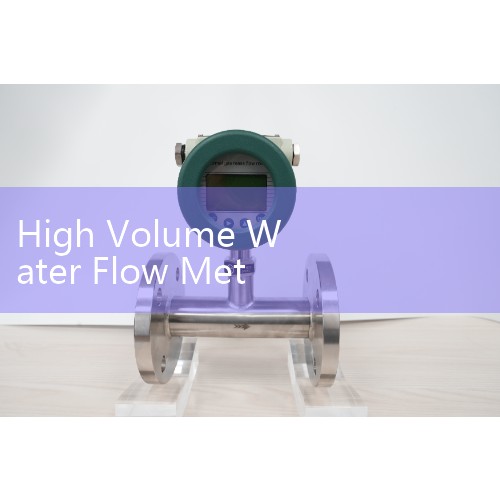
Inline electromagnetic flowmeters are the default choice for municipal trunk mains. They have no moving parts and work well in raw water, treated water, and flow with conductivity above 20 µS/cm. Choose a meter with 316L electrodes, an EPDM or hard rubber liner, and a remote transmitter if the chamber is wet.
Clamp-on ultrasonic flowmeters are also useful on calibration benches and for field checks. They do not need pipe cutting. A transit time clamp-on meter can verify a large line without shutting down the network. Accuracy is usually 0.5 percent to 1 percent depending on pipe condition.
Silver Instruments Electromagnetic Meters for Reference Duty
Silver Instruments supplies inline electromagnetic flowmeters from DN15 to DN2000. For municipal mains, we often recommend a DN300 or DN600 meter with 0.2 percent accuracy, 4-20 mA HART output, and Modbus RTU. The meter body can be flanged to EN 1092-1 or ANSI B16.5 for test bench piping.
Use an IP68 remote transmitter when the bench area is flooded or humid. The conve
_600x400.jpg)
Clamp-On Ultrasonic Meters for Portable Checks
For a quick verification on site, clamp-on ultrasonic meters work without cutting the pipe. One technician can carry a DN50 to DN1200 clamp-on set and check flow in 20 minutes. Because these meters do not contact the water, they avoid pressure drop and contamination risk.
We have seen this pattern on customer sites many times. A water utility in Vietnam used a Silver Instruments clamp-on ultrasonic meter to compare an aging DN500 inline meter. The site check showed a 1.8 percent deviation. That result justified a bench calibration.
Common Errors on Municipal Water Test Benches
Most engineers skip the straight run before the meter under test. A 90-degree elbow close to the inlet shifts the velocity profile and can cause a 0.5 percent to 1 percent error even with a good electromagnetic meter. Install at least 10D upstream and 5D downstream.
Air bubbles are another problem. A vent pipe and a back pressure valve keep the line full. Grounding rings or grounding electrodes reduce noise from pumps and variable frequency drives. Temperature compensation also matters when the water warms up during a long test.
FAQ
What is the minimum flow rate for calibrating a DN600 water meter?
Most DN600 meters need at least 150 cubic meters per hour for stable readings. Low flow cut-off settings can hide zero drift. Test from this point up to the meter maximum.
Which accuracy can a municipal main meter reach on a test bench?
Electromagnetic meters from Silver Instruments can reach 0.2 percent of reading. Ultrasonic clamp-on meters typically reach 0.5 percent to 1 percent depending on pipe wall condition and flow profile.
Do calibration benches need a master meter or a weighing system?
A master meter is faster and easier for large pipes. A gravimetric system gives the highest traceability. Both methods work for water mains. The choice depends on the lab uncertainty target and available space.
How often should a high volume water meter be calibrated?
Most utilities calibrate trunk main meters every 12 to 24 months. Critical billing meters may need a check every 6 months. Portable clamp-on ultrasonic meters can support annual field verification.
Can Silver Instruments help with a DN900 water main calibration?
Yes. Send the pipe diameter, flow range, pressure, signal output, and required accuracy. Silver Instruments can quote an inline electromagnetic meter or a clamp-on ultrasonic meter for reference duty.
Contact Silver Automation Instruments for a test bench meter or reference standard. Tel: +86-25-68650347. WhatsApp: +86-25-52155837. WeChat: +86 15365082610. Website: flow-meter.com.au. Send your pressure in bar, temperature in degrees Celsius, pipe size in DN, and flow range in cubic meters per hour.
 Hot Product
 Related AD