

『How Does a Gas Flow Meter Work: Tracks expanding gas volume using flexible internal diaphragms, vortex shedding frequencies, or heat transfer metrics.』Related information(flow rotameter|digital flow meter|balo meter|hydraulic flow meter|volumetric meter|positive displacement meter|pitot tube flow meter|displacement meter|cfm meter|variable area flow meter|inline flow meter|differential pressure flow meter|calibrated flow meter|velocity meter|paddle wheel flow meter|oval gear flow meter|anemometer hvac|multiphase flow meter|doppler flow meter|thorpe tube flowmeter|heat flow meter)
How Does a Gas Flow Meter Work?
Quick answer: A gas flow meter tracks expanding gas volume using flexible internal diaphragms, vortex shedding frequencies, or heat transfer metrics. The right method depends on gas type, pipe size, pressure, and required accuracy. Silver Automation Instruments supplies vortex and thermal mass gas flow meters for compressed air, biogas, natural gas, nitrogen, and flue gas applications.
Gas Flow Meter Working Principles
Silver Automation Instruments is a flow meter manufacturer and supplier based in Nanjing, China. We ship to Southeast Asia, Oceania, Latin America, Africa, and the Middle East. Most gas flow meters fall into one of three groups. Each group fits a different range of pressure, temperature, moisture, and pipe size. The first step is always the same. Send us your gas type, pressure in bar, temperature in Celsius, pipe size in DN, and flow range. Then we can recommend a specific meter.
Positive Displacement Gas Flow Meters with Flexible Internal Diaphragms
This type uses two or four flexible internal diaphragms inside a measuring chamber. Gas enters the chamber and fills one compartment. The diaphragm expands and pushes a slide valve. This action traps a known gas volume. Each diaphragm stroke sends a small mechanical pulse to the register. The register counts pulses and converts them to total flow volume.
These meters work well for low pressure fuel gas, biogas from digesters, and utility gas lines. They handle low flow rates better than many velocity based meters. Typical accuracy runs from 1.0 percent to 2.0 percent of reading. Many models are available from DN15 to DN100. Pay attention to gas cleanliness. Wet gas with solid particles can damage the diaphragms or jam the slide valve. We have seen this on customer sites in Vietnam and Malaysia where raw biogas was not filtered before the meter.
Vortex Shedding Gas Flow Meters
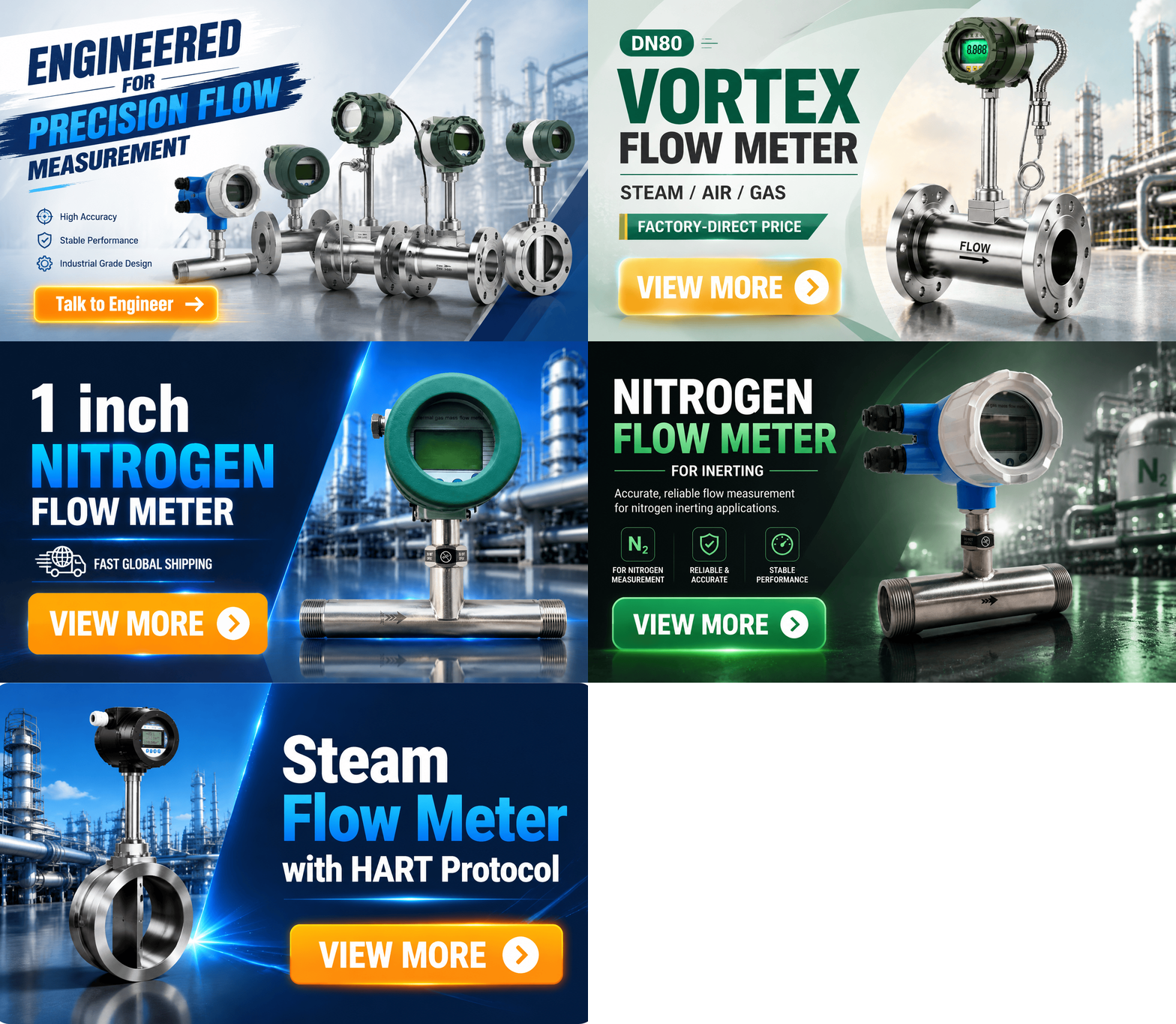
A vortex flow meter has a bluff body fixed inside the pipe. Gas flows around the body and creates alternating vortices. The vortex frequency is proportional to gas velocity. A piezoelectric sensor detects the frequency. The transmitter converts frequency to flow rate at operating conditions.
Vortex meters suit compressed air, saturated steam, natural gas, and many process gases. They are rugged and have no moving parts. Accuracy is around 1.0 percent of reading for liquids and 1.5 percent for gas. Line sizes run from DN15 to DN250. Process connections can be wafer or flanged. Output options include 4-20 mA HART, pulse, and RS485 Modbus. For hazardous areas we supply ATEX Zone 1 versions. In practice most engineers skip this part and go straight to the data sheet. But the key parameter is the minimum flow rate. If gas velocity drops below the cutoff, the meter reads zero.
Thermal Mass Gas Flow Meters
Thermal mass meters measure heat transfer between two sensors. One sensor is heated and one sensor reads the gas temperature. Flowing gas removes heat from the heated sensor. The heat loss is proportional to mass flow. This method measures mass flow directly without separate pressure or temperature compensation.
Thermal mass meters perform well in low pressure and low velocity gas lines. Common uses include compressed air, biogas, flue gas, aeration air, and natural gas. Inline and insertion versions are available. Inline models suit DN15 to DN80. Insertion models cover large ducts and pipes from DN100 to DN1000. Accuracy is typically 1.0 percent to 1.5 percent of full scale. The sensor uses PT100 platinum elements. These meters tolerate temperature up to 200 °C and pressure up to 16 bar. Mass flow ranges start from 0.5 kg/h and go up based on pipe size. We ha
_600x400.jpg)
Which Gas Flow Meter Fits Your Application
Use a thermal mass meter for low pressure biogas, compressed air, and flue gas where mass flow matters. Use a vortex meter for compressed air, steam, and process gas at higher pressure and velocity. Use a diaphragm gas meter for clean low pressure gas utility totals. Do not use a diaphragm meter for dirty wet gas or rapid pulsating flow. Do not use a vortex meter below the minimum flow cutoff.
Here is the thing. Most gas flow meter selection mistakes come from ignoring minimum flow rate and moisture content. A customer in Vietnam asked us about raw biogas from a rubber processing plant. The gas was wet and pressure was below 0.2 bar. We recommended an insertion thermal mass meter installed after a moisture separator.
Recommended Models and Parameters from Silver Instruments
Silver Instruments supplies inline vortex flow meters from DN15 to DN250 with wafer and flanged connections. Accuracy is 1.0 percent of reading for liquids and 1.5 percent for gas. Outputs include 4-20 mA HART, pulse, and RS485 Modbus. Operating temperature is from minus 40 to 250 °C. Pressure rating goes up to 40 bar depending on the body material.
We also supply inline thermal mass flow meters from DN15 to DN80 and insertion thermal meters from DN100 to DN1000. The sensor uses PT100 platinum elements. Outputs include 4-20 mA, HART, and Modbus. We can provide ATEX Zone 1 certification for hazardous gas areas. Typical delivery time to Southeast Asia and Oceania is 7 to 14 days after drawing approval.
How to Send an Inquiry
Send us your gas type, pressure in bar, temperature in Celsius, pipe size in DN, and flow range. Include your country and the installation orientation. We will reply with model selection, accuracy, price, and delivery time. Contact Silver Automation Instruments at Tel: +86-25-68650347, Whatsapp: +86-25-52155837, WeChat: +86 15365082610. Our website is flow-meter.com.au.
Gas Flow Meter FAQ
Can a gas flow meter measure compressed air?
Yes. Thermal mass and vortex meters both measure compressed air. Thermal mass gives mass flow directly. Vortex gives volume flow at line conditions. Send us your pipe size and pressure to choose the right model.
What is the accuracy of vortex and thermal gas flow meters?
Vortex accuracy is around 1.5 percent of reading for gas. Thermal mass accuracy is around 1.0 percent to 1.5 percent of full scale. Calibration data comes with every Silver Instruments shipment.
Do Silver Instruments gas flow meters support HART or Modbus?
Yes. Our gas flow meters support 4-20 mA HART, pulse, and RS485 Modbus. Tell us your control system protocol before ordering.
What pipe sizes can I order?
Inline vortex meters cover DN15 to DN250. Inline thermal mass meters cover DN15 to DN80. Insertion thermal meters cover DN100 to DN1000. Flanged and wafer connections are available.
Can thermal mass flow meters work with wet gas?
Thermal mass meters perform best in dry gas or gas with small moisture content. Heavy liquid slugging can cause reading errors. For wet raw biogas use a vortex meter with a drain or a thermal meter installed after a moisture separator.
We have local distributors in Vietnam, Indonesia, Australia, the United Arab Emirates, Mexico, and Chile. For a fast quote contact Silver Automation Instruments at Tel: +86-25-68650347, Whatsapp: +86-25-52155837, WeChat: +86 15365082610.
 Hot News
 Related AD